
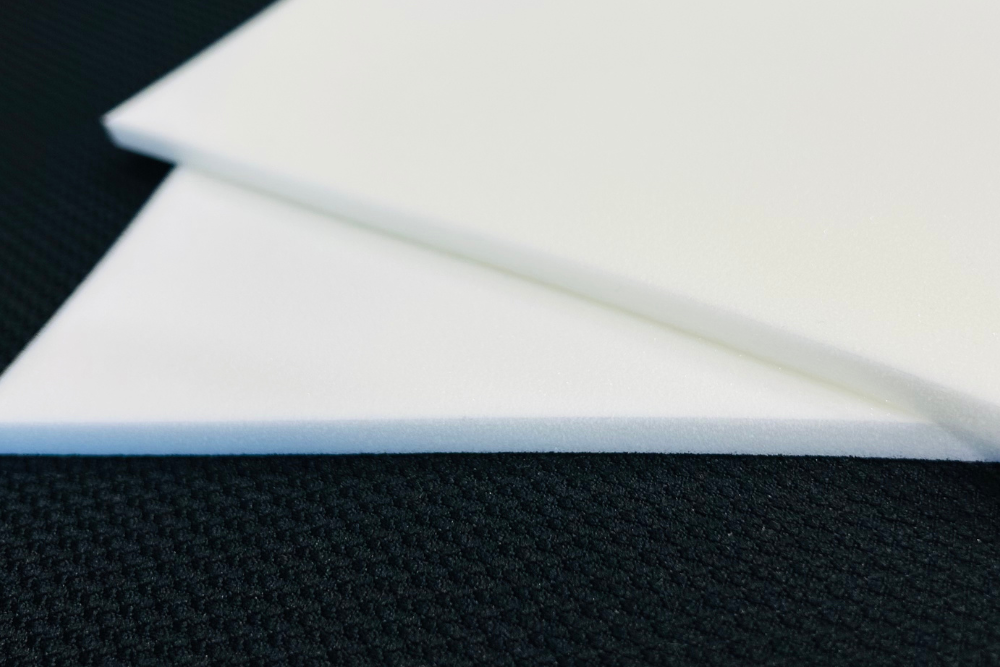
In the rapidly evolving landscapes of modern technology and material science, the engineering hidden within our devices often dictates their success. Among the most critical yet invisible components driving this innovation are specialty cellular foams. From the intricate internal architecture of a flagship smartphone to the heavy-duty environmental seals inside an automobile, these advanced materials quietly enhance our daily lives.
As a global leader in precision material conversion, Foamtec International stands at the forefront of this field. By expertly blending high-volume manufacturing with bespoke customization, Foamtec shapes open and closed-cell foam solutions to meet the strict performance demands of both tech sector engineers and everyday consumers.
The Core Science: Open-Cell vs. Closed-Cell Specialty Cellular Foams
To implement these materials effectively, design engineers must navigate the distinct physical properties of open-cell and closed-cell molecular networks. Both structures serve vital, highly specialized roles within industrial applications.
Open-Cell Foams: Airflow, Filtration, and Acoustics
Open-cell foams feature an interconnected network of cells that allow air, gases, and fluids to pass through freely. This lightweight, highly flexible structure is uniquely suited for thermal management and acoustic control.
- Thermal Dissipation: In tightly packed electronic enclosures, open-cell configurations facilitate consistent airflow, drawing heat away from delicate microprocessors.
- Acoustic Dampening: The porous matrix acts as a natural sound trap, absorbing airborne ambient noise and eliminating internal high-frequency component whines.
Closed-Cell Foams: Environmental Barriers and Impact Shielding
In contrast, closed-cell foams are comprised of entirely sealed, gas-filled pockets. Because the cell walls remain fully intact, the material acts as an absolute barrier against external forces.
- Moisture and Ingress Protection: Closed-cell foam is inherently hydrophobic, making it paramount for creating watertight and dustproof environmental gaskets.
- Cushioning and Shock Absorption: The rigid, resilient matrix provides superior compression resistance, making it an ideal choice for protective packaging and protective chassis inserts that safeguard devices from drops and physical impacts.
Foamtec’s Advanced Manufacturing and Processing Capabilities
Sourcing raw polyurethane or polyethylene foam is only the first step. To transform these raw materials into high-performance components, Foamtec utilizes advanced, vertically integrated in-house production capabilities.
Through proprietary refinement techniques, including the specialized foamtec polyck process, Foamtec modifies cell structures to achieve exact density, tensile strength, and pore uniformity specifications. This rigorous control ensures that all elastomeric substrates maintain structural integrity over decades of continuous compression and thermal cycling.
Furthermore, this controlled processing allows Foamtec to seamlessly integrate functional additives, such as anti-static properties for ESD protection or custom chemical compounds for specialized industrial filters.
Customized Configurations for the Electronics Sector and Beyond
The electronics industry is defined by relentless miniaturization. As components shrink, the margin for manufacturing error drops to zero. Recognizing these nuanced requirements, Foamtec leverages its specialized engineering teams to co-develop bespoke components tailored to client-specific architectures.
This custom-engineered approach ensures that finished foam tec products integrate flawlessly into high-speed automated pick-and-place assembly lines. Whether an engineer requires ultra-thin die-cut gaskets to seal a touchscreen display or a complex multi-layered dampener for an automotive radar array, Foamtec delivers components that expand device longevity while aligning with strict performance benchmarks.
Enhancing Everyday Life: Pervasive Foam Applications
While Foamtec’s technologies thrive in high-tech laboratories, their real-world impact extends directly into our homes and vehicles:
- High-Efficiency Consumer Filtration: Advanced open-cell polyurethane foams are widely used as particle filtering matrices within vacuum cleaners, ensuring optimal suction power while capturing micro-allergens.
- Automotive Energy Efficiency: High-density closed-cell insulation panels line modern vehicle cabins, isolating road noise and optimizing climate control systems to drive measurable energy savings.
- Medical Device Protection: Fully biocompatible, cleanroom-fabricated foam gaskets provide secure fluid management and device cushioning across critical patient-care monitors.
Uncompromising Safety: Fire Retardancy and Regulatory Compliance
In the consumer electronics and automotive fields, physical performance must be balanced with strict fire safety. Materials buried within electrical enclosures or vehicle dashboards face continuous exposure to electrical currents and heat.
Foamtec’s commitment to user asset protection is underscored by its rigorous adherence to global safety compliance. Our specialty cellular foams are engineered to satisfy stringent fire-retardant regulations, earning official Underwriters Laboratories (UL) certifications and Motor Vehicle Safety Standard (MVSS) compliance. This proactive engineering mitigates fire risks, ensures chemical stability, and delivers absolute peace of mind to Tier 1 supply chains.
A Cornerstone of Modern Innovation
The synergy between Foamtec International’s manufacturing expertise and the expansive applications of open and closed-cell foams continues to drive safety and performance boundaries forward. By prioritizing vertical integration, precise customization, and unwavering regulatory compliance, Foamtec exemplifies how strategic material science elevates the tools of our daily lives.
Optimize Your Component Design: Ready to elevate your product’s thermal, acoustic, or sealing performance? Explore Foamtec International’s comprehensive capabilities or reach out to our engineering team today to request custom material prototyping.
FAQs
Q: What industries benefit most from specialty cellular foams?
A: Specialty cellular foams are heavily utilized across the electronics, automotive, medical device, aerospace, and renewable energy sectors. Their highly tunable properties allow them to handle everything from acoustic insulation in electric vehicles to shock absorption in smartphones.
Q: How does the foamtec polyck process alter raw foam performance?
A: The foamtec polyck process is an advanced manufacturing methodology used to tightly control, refine, and alter the cellular density, flexibility, and physical structure of polymer matrices. This allows Foamtec to deliver customized mechanical specs, such as ultra-low compression set or precise airflow resistance, tailored to specific industrial requirements.
Q: Are foam tec products safe for use in high-heat electronic environments?
A: Yes. Foamtec explicitly engineers high-performance foam lines featuring advanced thermal stability and flame-retardant additives. These materials achieve critical UL certifications and automotive MVSS compliance, ensuring they will not degrade, melt, or accelerate fire risks under continuous exposure to operational heat.
Q: Should I choose open-cell or closed-cell foam for an environmental seal?
A: For an absolute environmental or weather seal designed to block out moisture, dust, and driving rain, closed-cell foam is the correct choice. Its fully sealed cell walls prevent fluid absorption entirely, whereas open-cell foam is porous and better suited for airflow, filtration, and acoustic dampening.