
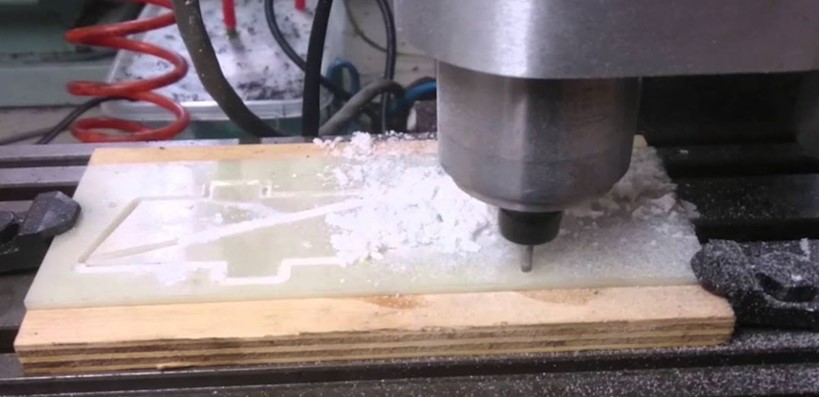
When engineering high-strength component parts for extreme environments, mechanical and electrical designers frequently face a fundamental question: what is garolite, and how can it be effectively fabricated?
Commonly known in industrial circles as G10, Garolite is a high-pressure fiberglass laminate celebrated for its exceptional durability, structural resilience, and electrical isolation properties. However, because it is incredibly rigid and abrasive, transforming raw stock into precise, functional components requires mastering the advanced art and science of precision of die cutting
This comprehensive guide explores the core properties of G10, compares it to alternative composites, and highlights how advanced die-cutting processes turn raw sheets into high-performance industrial components.
What is Garolite? Understanding the Composite Material
To fully grasp its utility, it helps to understand what is g10 at a material science level. Garolite (G10) is manufactured by continuous layering of woven glass cloth impregnated with an epoxy resin binder. This matrix is subsequently cured under intense heat and high pressure to form dense, flat sheets.
The resulting laminate exhibits a remarkable strength-to-weight ratio, near-zero moisture absorption, and excellent dimensional stability under physical load.
G10 vs. Other High-Pressure Composites
While G10 shares structural similarities with materials like Micarta and carbon fiber laminates, it is distinguished primarily by its glass-cloth filler core. It is also frequently confused with FR4, though important distinctions exist:
- G10 vs. FR4: FR4 (Flame Retardant 4) is essentially G10 infused with bromine, a chemical that provides self-extinguishing flame-retardant properties. Standard G10 lacks this inherent flame retardancy but remains a go-to choice for applications where bromine outgassing is prohibited or flame specs are not mandated.
- G10 vs. G11: Standard G10 maintains exceptional dimensional stability and mechanical performance up to 130°C. For environments exceeding this threshold, its advanced variant (G11) incorporates a higher-temperature resin matrix capable of tolerating continuous exposures up to 180°C without degrading.
The Precision Process for Cutting G10 Sheets
The structural properties that make this composite highly dependable also make cutting g10 sheet materials a specialized task. Because the embedded glass fibers are highly abrasive, standard converting methods will quickly dull conventional blades. The precision die-cutting process requires specific modifications:
1. Material Preparation
G10 raw stock is prepared in strict accordance with the target application’s design. Raw sheets typically range in thickness from thin 0.5 mm layers up to robust sheets exceeding 3.2 mm.
2. Specialized Tooling
Precision dies must be engineered from ultra-hardened tool steel or carbide alloys to withstand the abrasive fiberglass content. Depending on design complexity and required tolerances, fabricators deploy flatbed presses, high-speed rotary dies, or advanced laser-cutting machinery.
3. The Cutting Phase
The hardened die is pressed onto the G10 sheet with high calibrated tonnage, shearing the material into its final shape. For highly intricate internal geometries or prototypes, laser-cutting systems offer superior precision without structural deformation, while mechanical die-cutting remains the most cost-effective solution for high-volume commercial production.
4. Technical Post-Processing
Once the parts are cut, they undergo a series of finishing steps. This can include deburring to smooth out sharp fiberglass edges, mechanical drilling for precise interior holes, thorough cleaning to remove dust particulates, and specialized surface treating.
Key Considerations When Fabricating G10
Industrial engineers must account for several material variables when designing parts for G10 conversion:
- Accelerated Tool Wear: The woven fiberglass matrix behaves like an abrasive stone against cutting edges. Tooling must be continuously monitored, maintained, or coated with wear-resistant treatments to prevent edge fraying.
- Material Yield and Waste Optimization: Because G10 is a premium composite, strategic nested layout planning is required during the digital design phase to maximize sheet real estate and lower production costs.
- Thickness Limitations: As thickness scales past 3.2 mm, standard mechanical die-cutting may cause slight edge tapers. Thicker sheets require specialized CNC routing or waterjet alternatives to maintain straight perpendicular walls.
Industrial Applications of Die-Cut G10
Thanks to its multi-disciplinary performance, die-cut Garolite components are utilized across a vast spectrum of heavy industries:
Electrical Insulation and Switchgear
G10 is a premier dielectric material. It is widely fabricated into custom terminal boards, structural washers, insulators, busbar supports, and tap changers inside high-voltage transformers, switchgear enclosures, and rotating electrical motors.
Mechanical Components
With its outstanding dimensional stability and resistance to cold flow under load, G10 is frequently machined or die-cut into robust industrial gears, precise spacers, flange gaskets, and structural wear plates.
Consumer and Tactical Goods
Because G10 is entirely impervious to moisture, sweat, and oils, it is highly favored in the consumer sector for fabricating durable knife handles, handgun grips, tactical tool handles, and sports equipment overlays.
Partnering with Foamtec International for Custom G10 Solutions
Successfully converting abrasive materials like Garolite demands a manufacturing partner with cutting-edge equipment and extensive material experience. Foamtec International stands at the forefront of precision die-cutting, providing custom fabrication solutions tailored to complex industrial requirements.
Our state-of-the-art facilities optimize material nesting to significantly reduce scrap waste, while our advanced tool-management protocols ensure consistent, high-tolerance output despite G10’s tough glass content. From initial prototyping to high-volume production, Foamtec delivers certified, dependable custom composite components.
Optimize Your Components: Ready to leverage the power of G10 in your next project? Contact the technical engineering team at Foamtec International today to discuss material sourcing, custom tooling configurations, or to receive a comprehensive quote.
FAQs
A: Garolite is a commercial trade name for a high-pressure laminate material made from layers of woven glass fabric bound together with a durable epoxy resin. It is widely known for having immense mechanical strength, low moisture absorption, and high electrical insulating capabilities.
A: They are nearly identical in structural composition, but with one key difference: FR4 contains added bromine compounds that give it self-extinguishing flame-retardant properties. Standard G10 does not have these additives, making it preferred in applications where the presence of halogenated flame retardants is restricted.
A: G10 contains woven glass filaments, which are highly abrasive. Standard steel cutting blades dull very rapidly when processing this material. Successful cutting of g10 sheet components requires specialized high-tonnage presses, hardened steel or carbide tool dies, or precise CNC laser systems.
A: Yes. G10 is excellent for outdoor industrial applications because its moisture absorption rate is virtually zero (less than 0.1%). It maintains its mechanical strength and electrical insulation properties even when continuously exposed to high humidity or wet environments.
Looking for Die-Cut G10 Solutions?
Discover how Foamtec International’s advanced capabilities can enhance your applications.