
In the high-stakes fields of advanced electronics and automotive manufacturing, foam products serve a multitude of mission-critical roles. They are relied upon daily for thermal insulation, vibration damping, acoustic isolation, and electromagnetic interference (EMI) shielding.
However, as devices shrink and vehicle cabins become more sealed, engineers must meticulously manage a hidden threat: foam outgassing.
Outgassing, the spontaneous release of volatile organic compounds (VOCs) and other trapped gases from a material, can compromise component reliability, threaten passenger health, and lead to costly regulatory failures. Managing this phenomenon through advanced engineering is no longer optional; it is a fundamental requirement for modern product design.
Understanding Foam Outgassing and Its Origins
Foam materials, particularly those derived from advanced polymer matrices like polyethylene (PE), polyurethane (PU), and polyimide, naturally interact with their environments throughout their operational lifecycles.
The gases released during foam outgassing typically originate from variables embedded deep within the material’s manufacturing history:
- Residual chemical solvents
- Unreacted monomers left over from polymerization
- Additives, flame retardants, or plasticizers used to alter physical traits
While these microscopic emissions may quickly disperse and remain completely harmless in wide-open outdoor settings, they become problematic when trapped inside enclosed, sensitive environments. When confined inside a tightly sealed smartphone chassis or an airtight automotive cockpit, these accumulated vapors pose a serious threat.
Implications of Outgassing in the Electronics Sector
In electronic hardware design, outgassing can trigger a chain reaction of mechanical and electrical degradation.
Component Reliability & Micro-Deposition
In tightly packaged electronic assemblies, outgassed volatile compounds have nowhere to escape. Over time, these gaseous residues condense and form an insulative, microscopic film on delicate internal surfaces. When this film builds up on printed circuit boards (PCBs), integrated sensors, or optical camera lenses, it can increase electrical resistance, disrupt high-speed signal integrity, block light transmission, or cause catastrophic short circuits.
Degradation of Thermal and EMI Shielding Efficiency
Many specialized foam gaskets are engineered explicitly for thermal management or EMI shielding. Continuous, unmanaged outgassing fundamentally alters the chemical stability of the underlying polymer matrix. As the foam loses key chemical components to the air, it can dry out, shrink, or lose its conductivity, resulting in premature component failure and unexpected field repairs.
Contamination in High-Precision Environments
For high-tech sectors like semiconductor fabrication and aerospace engineering, cleanliness requirements are absolute. Outgassed particulates inside cleanrooms or satellite payloads can permanently contaminate delicate silicon wafers or cloud optical sensors, rendering multi-million dollar systems completely useless.
Implications of Outgassing in Automotive Applications
The automotive shift toward Electric Vehicles (EVs) and smart cabins has placed interior air quality under an intense microscope.
Air Quality and Passenger Health
The familiar “new car smell” is primarily the acoustic and visual byproduct of massive collective outgassing from interior foams, adhesives, and textiles. While consumers traditionally accepted this scent, prolonged exposure to these concentrated VOC emissions inside a closed vehicle cabin can degrade air quality and present subtle health risks to passengers.
Material Durability and Aesthetic Degradation
Continuous outgassing accelerates the physical aging of polymer components. As volatile additives escape the foam matrices used in seats, headliners, and dashboard trim, the components can experience significant shifts in mechanical properties. This manifest as premature hardening, loss of elastic cushioning, unappealing discoloration, and a drastically reduced service life.
Strict Regulatory Compliance
With global markets moving aggressively toward sustainability, automotive OEMs face rigid environmental mandates. Manufacturers selling vehicles internationally must verify absolute compliance with strict chemical frameworks, such as the European Union’s REACH and RoHS regulations. Tracking, quantifying, and minimizing interior VOC profiles is now a non-negotiable step for achieving commercial vehicle homologation.
Engineering Solutions: Strategies to Control and Minimize Outgassing
Mitigating outgassing risks requires an intentional combination of material intelligence, modified manufacturing, and rigorous physical testing.
1. Selecting Advanced Low Emission Foam Substrates
The first and most effective line of defense is choosing an inherently stable low emission foam from the start. Specifying crosslinked polyethylene (XLPE) or advanced polyimide foams significantly reduces the presence of easily vaporized chemical remnants. Engineers should prioritize sourcing materials that carry certified documentation matching specific industry standards, such as UL 94 flame ratings or ISO quality benchmarks.
2. Modified Manufacturing and Converting Processes
Raw materials can be chemically or thermally forced to release their volatile compounds before they are installed in a finished product. Advanced fabricators deploy specialized post-manufacturing techniques, such as:
- Extended thermal post-curing to drive off unreacted monomers
- Controlled vacuum degassing to pull trapped micro-gases out of cellular structures
- Formulating foams with chemical scavenging additives that permanently bind volatile elements
3. Analytical Testing and Quality Validation
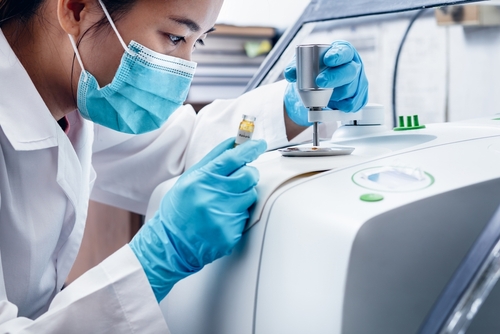
To ensure a component satisfies strict outgassing limits, it must undergo rigorous analytical validation throughout its design lifecycle. Precision laboratories utilize specialized testing methods to verify material stability:
- Thermogravimetric Analysis (TGA): Monitors material weight loss as temperature increases to pinpoint exactly when outgassing begins.
- Mass Spectrometry & FTIR Spectroscopy: Identifies the precise chemical fingerprints of the released vapors to ensure no hazardous compounds are present.
4. Strategic Design Considerations
When a highly specific structural foam must be used, industrial designers can implement structural workarounds. This includes building localized venting paths into product enclosures to direct vapors away from active circuitry, or applying thin, impermeable barrier films over the foam to seal the outgassing elements safely inside the substrate.
Foamtec International: Excellence in Outgassing Emission Control
Navigating the complexities of volatile emissions demands a manufacturing partner with deep expertise in polymer science and technical conversion. Foamtec International’s Specialty Converting Division is a trusted leader in developing, purifying, and fabricating custom foam solutions that satisfy the strict outgassing boundaries of the electronics, aerospace, and automotive industries.
With decades of high-volume supply chain experience, Foamtec leverages advanced Research and Development capabilities to engineer high-purity foams with exceptionally low volatile profiles. Our state-of-the-art manufacturing facilities and cleanroom environments ensure that every custom component is fabricated, cleaned, and verified to meet or exceed international regulatory expectations.
Whether you require cleanroom-processed gaskets or customized low emission foam components for automotive interiors, Foamtec provides the vertical integration required to secure your product’s reliability.
FAQs
A: Foam outgassing refers to the structural release of volatile organic compounds (VOCs), unreacted monomers, or residual solvents from a polymer matrix over time. While this process frequently produces a noticeable chemical odor, outgassing can continue invisibly long after the initial scent has faded, continuously depositing microscopic residues onto nearby surfaces.
A: Selecting a certified low emission foam ensures that the material contains minimal volatile elements. This prevents the release of gaseous airborne chemicals inside a sealed electronics housing, eliminating the risk of sticky chemical films condensing onto printed circuit boards (PCBs), lenses, or sensors where they could cause signal degradation or electrical shorts.
A: Advanced fabricators like Foamtec utilize specialized processing steps to purify materials before delivery. These steps include thermal post-curing, where the foam is baked in controlled ovens to safely burn off residual monomers, and vacuum degassing, which uses low pressure to draw trapped gases out of the foam’s cellular structure.
A: Global frameworks like REACH strictly limit or prohibit the use of specific hazardous chemicals and heavy VOC emitters inside vehicle cabins. If an interior foam component releases restricted gases above allowed parts-per-million (ppm) thresholds, the entire vehicle assembly can fail compliance certification, blocking it from commercial sale in international markets.